Tiān Gōng Kāi Wù: Rocks, Fire, Thunder Beiqiu Museum of Contemporary Art, Nanjing, China, 2025
Tiān Gōng Kāi Wù: Rocks, Fire, Thunder Beiqiu Museum of Contemporary Art, Nanjing, China, 2025. Video: BMCA, 2025
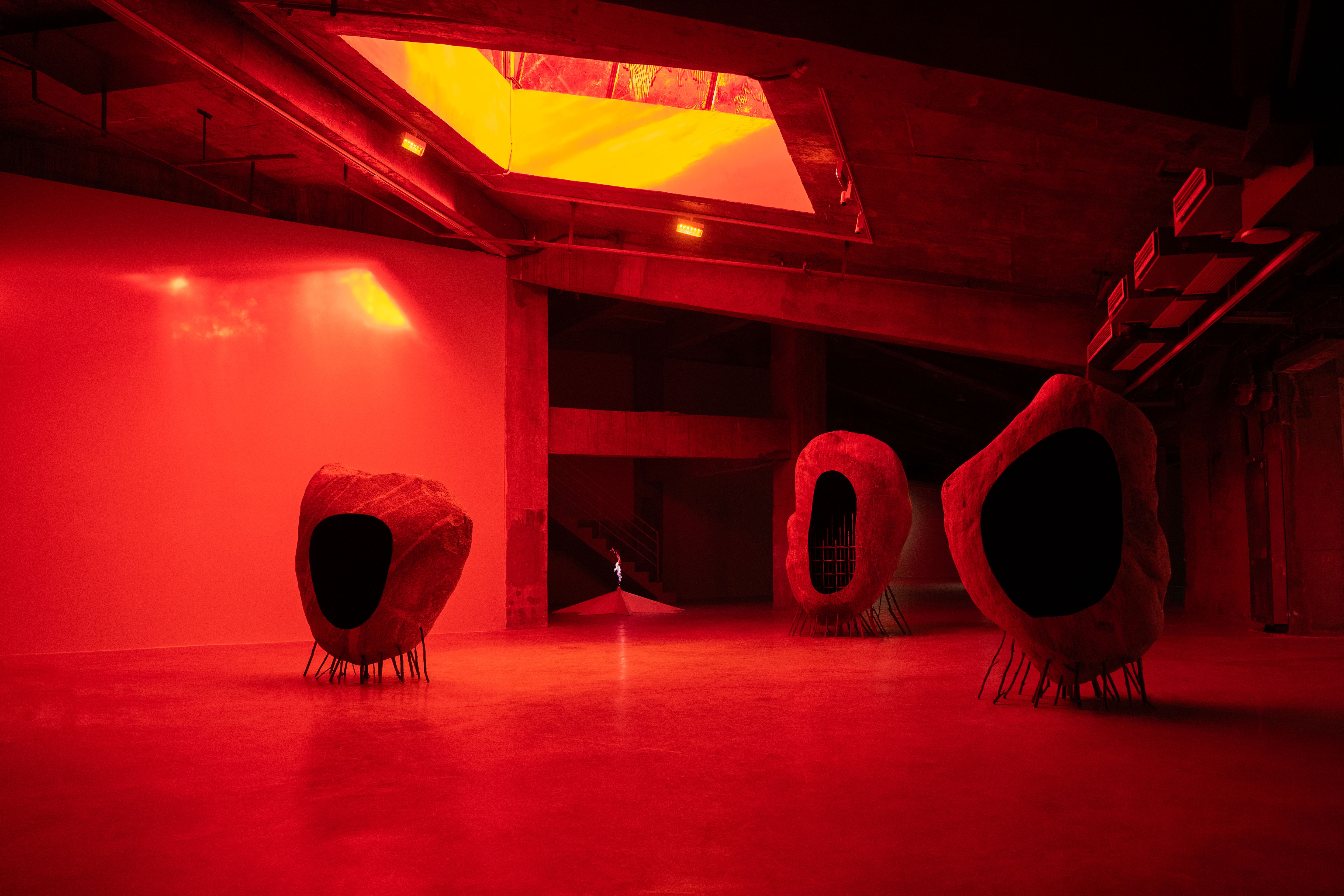
Installation view, "Tiān Gōng Kāi Wù: Rocks, Fire, Thunder", Beiqiu Museum for Contemporary Art, Nanjing, 2025.
The title Tiān Gōng Kāi Wù (or Heavenly Craftsmanship, Opening Things) carries philosophical resonance: “Heavenly Craftsmanship” refers to the self-generating artistry of nature, while “Opening Things” denotes human creativity that mirrors cosmic laws. The title thus signifies more than a text; it embodies a worldview in which art and technology evolve through cycles of imitation and transcendence, modeling a vision of coexistence and renewal between humanity and the natural world. The exhibition’s triad—rocks, fire, and thunder—are no longer forms of “nature” external to humanity, but rather isomorphic entities of man and nature, transformed through the artist’s mediation and creative process.
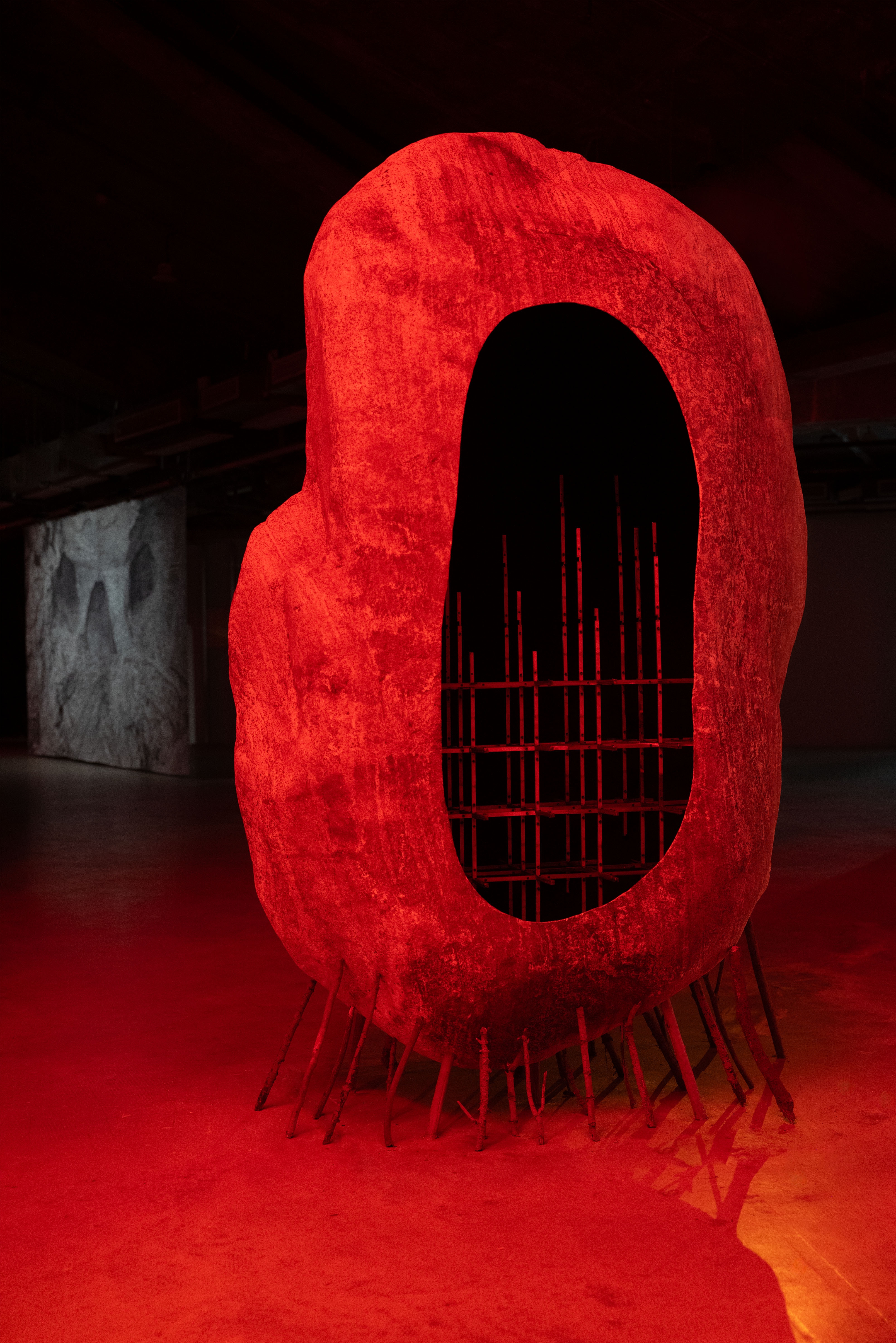
Boulder (Granitic Gneiss I), stone, resin, metal, wood. Installation view, "Tiān Gōng Kāi Wù: Rocks, Fire, Thunder", Beiqiu Museum for Contemporary Art, Nanjing, 2025.
For the exhibition, Julius von Bismarck created a new series of sculptures titled Boulder, inspired by the museum’s name, Beiqiu, meaning “North Hill.” At first sight, the works appear to be heavy, solid boulders, yet they are in fact hollow structures: only a thin outer shell remains, supported on the inside by a delicate, grid-like steel framework. This contrast reveals the illusion of mass and points to the sculptural processes through which positive and negative forms, surface and void, solidity and emptiness are brought into relation.
The series also draws inspiration from von Bismarck’s visit to Lingyin Temple, where he observed worshippers leaning wooden sticks against rocks as gestures of prayer. Expanding on this image, he gives the stones “legs,” imbuing them with a sense of life and humor, and reflecting on the spiritual autonomy of matter.
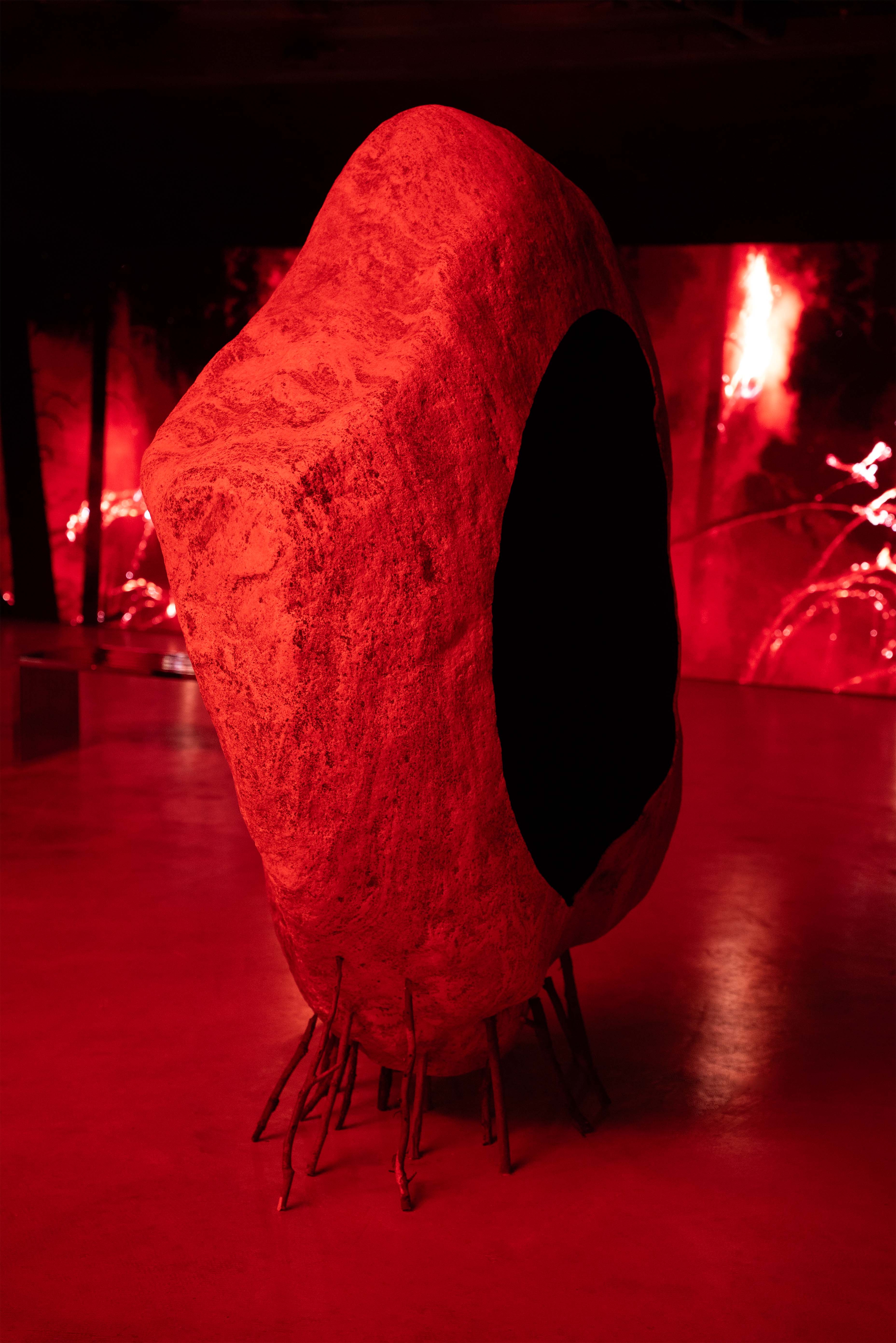
Boulder (Pink Granitic Gneiss), stone, resin, metal, wood. Installation view, "Tiān Gōng Kāi Wù: Rocks, Fire, Thunder", Beiqiu Museum for Contemporary Art, Nanjing, 2025.
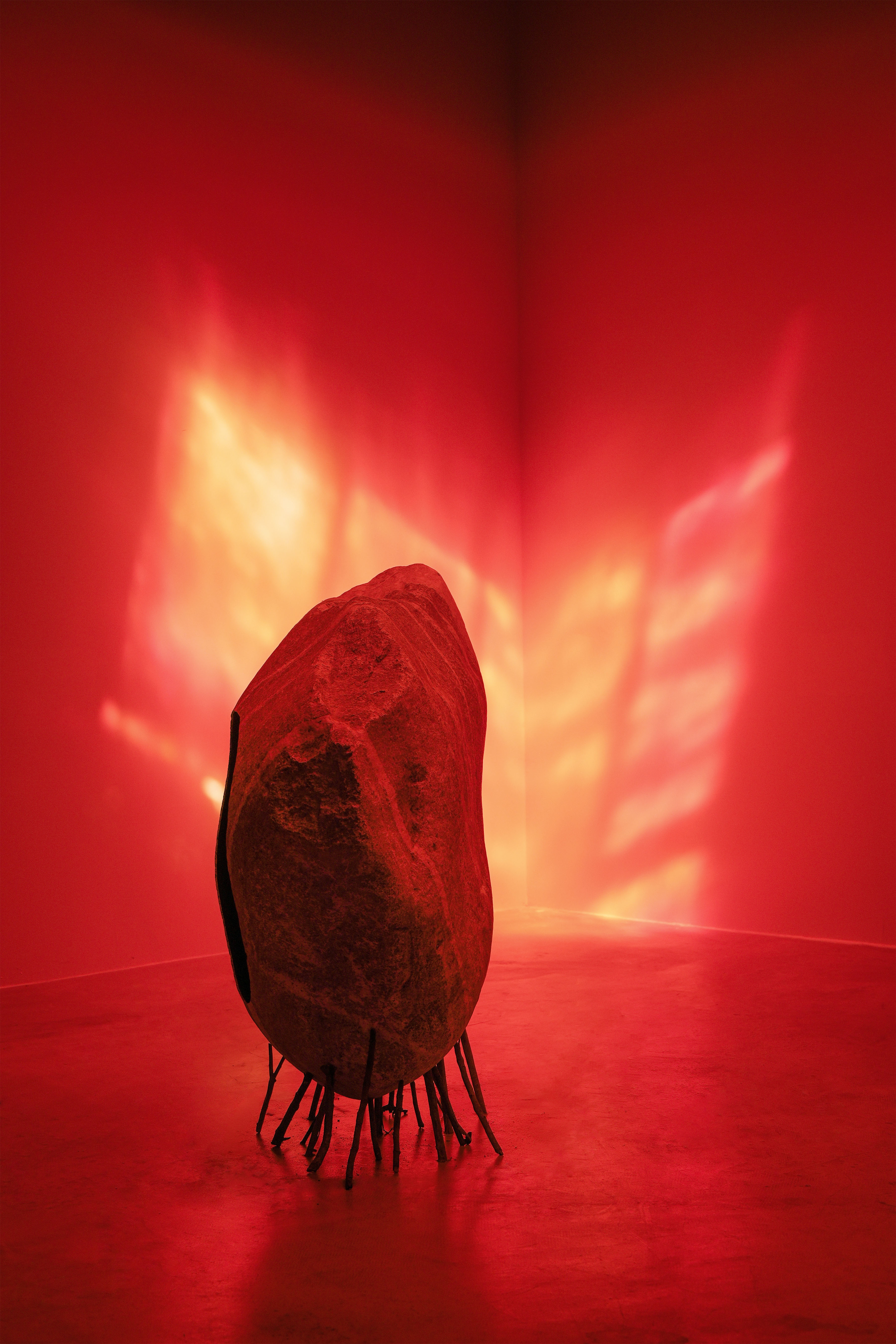
Boulder (Granitic Gneiss II) , stone, resin, metal, wood. Installation view, "Tiān Gōng Kāi Wù: Rocks, Fire, Thunder", Beiqiu Museum for Contemporary Art, Nanjing, 2025.
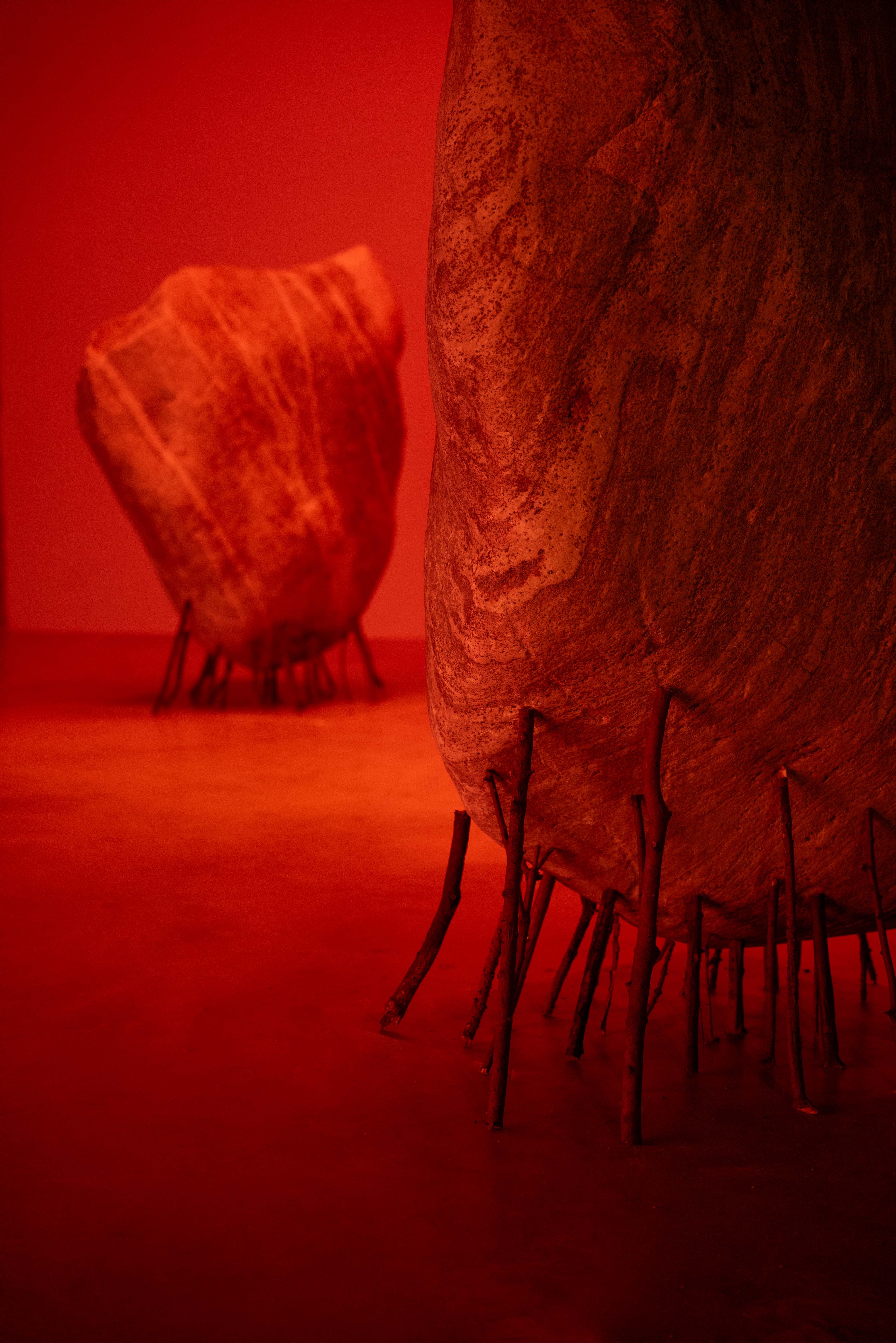
Installation view, "Tiān Gōng Kāi Wù: Rocks, Fire, Thunder", Beiqiu Museum for Contemporary Art, Nanjing, 2025.
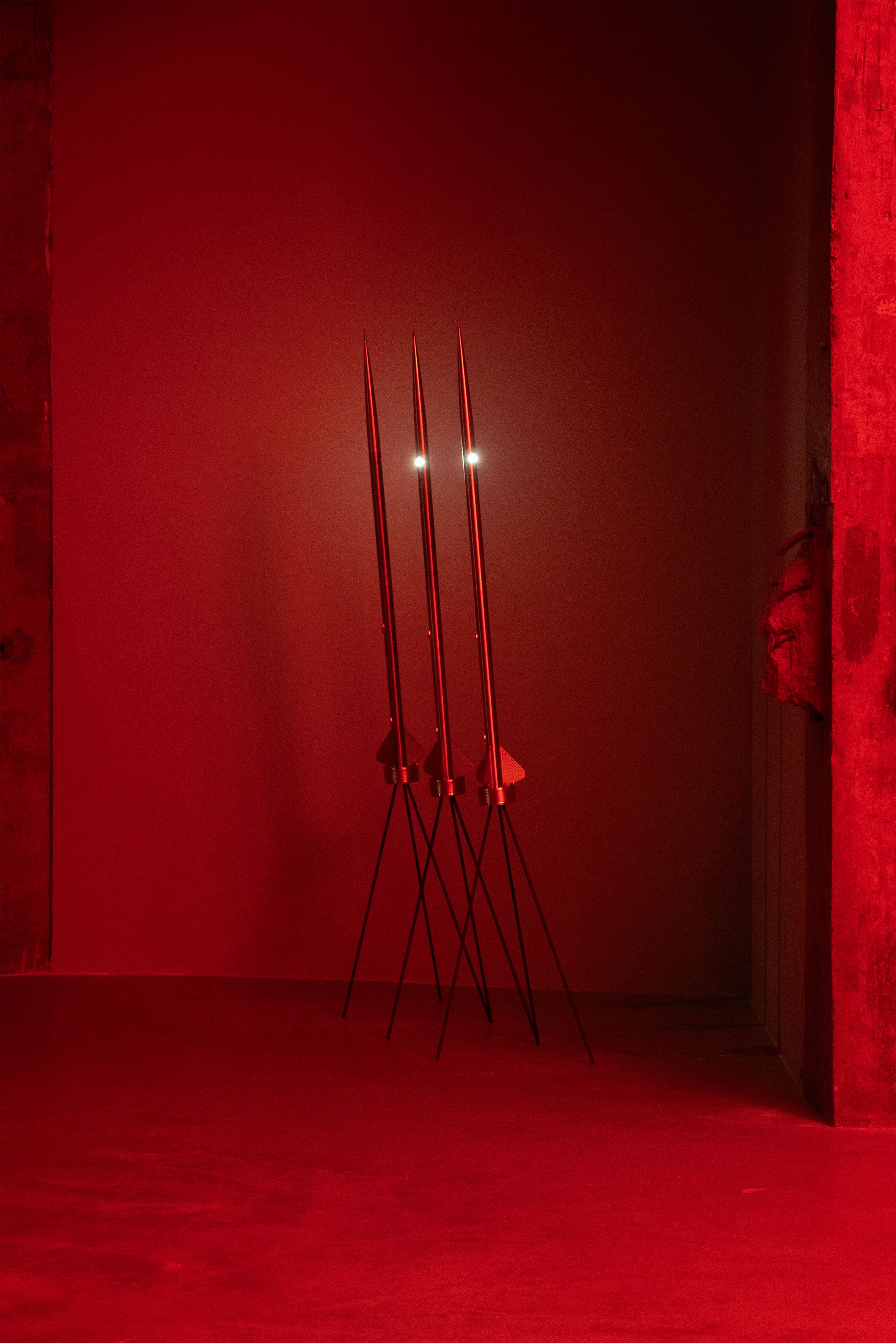
Installation view, "Tiān Gōng Kāi Wù: Rocks, Fire, Thunder", Beiqiu Museum for Contemporary Art, Nanjing, 2025.
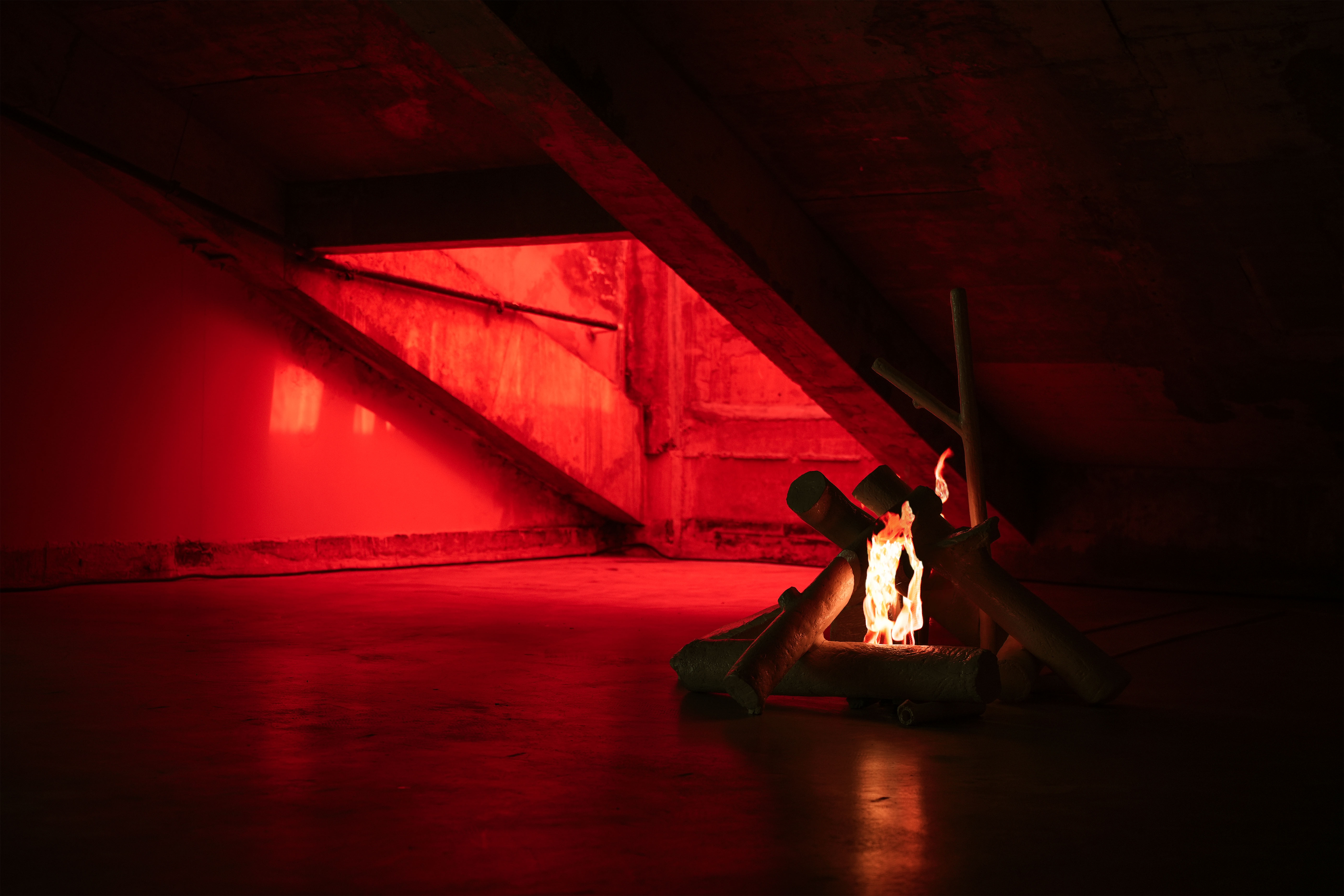
Installation view, "Tiān Gōng Kāi Wù: Rocks, Fire, Thunder", Beiqiu Museum for Contemporary Art, Nanjing, 2025.
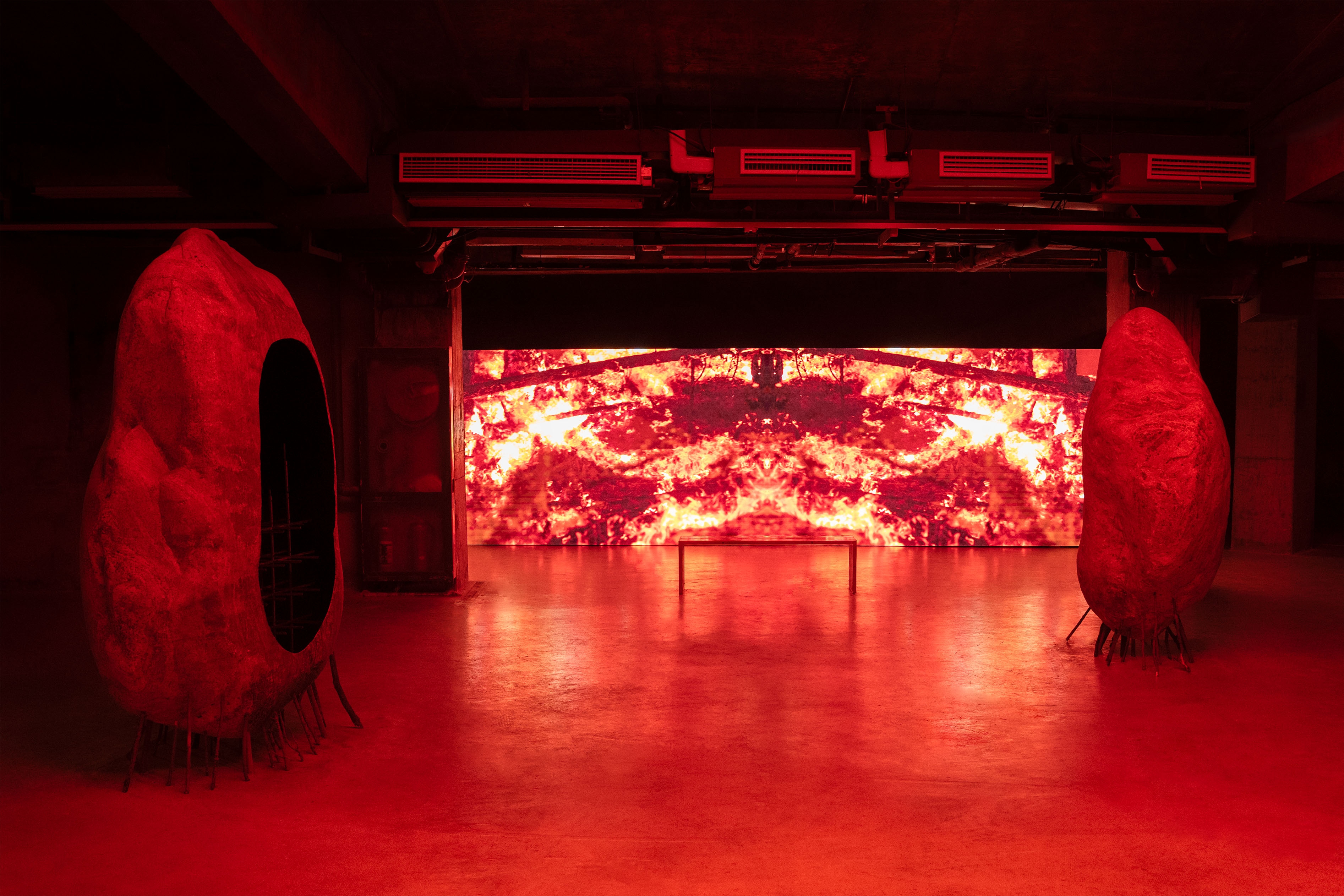
Installation view, "Tiān Gōng Kāi Wù: Rocks, Fire, Thunder", Beiqiu Museum for Contemporary Art, Nanjing, 2025.
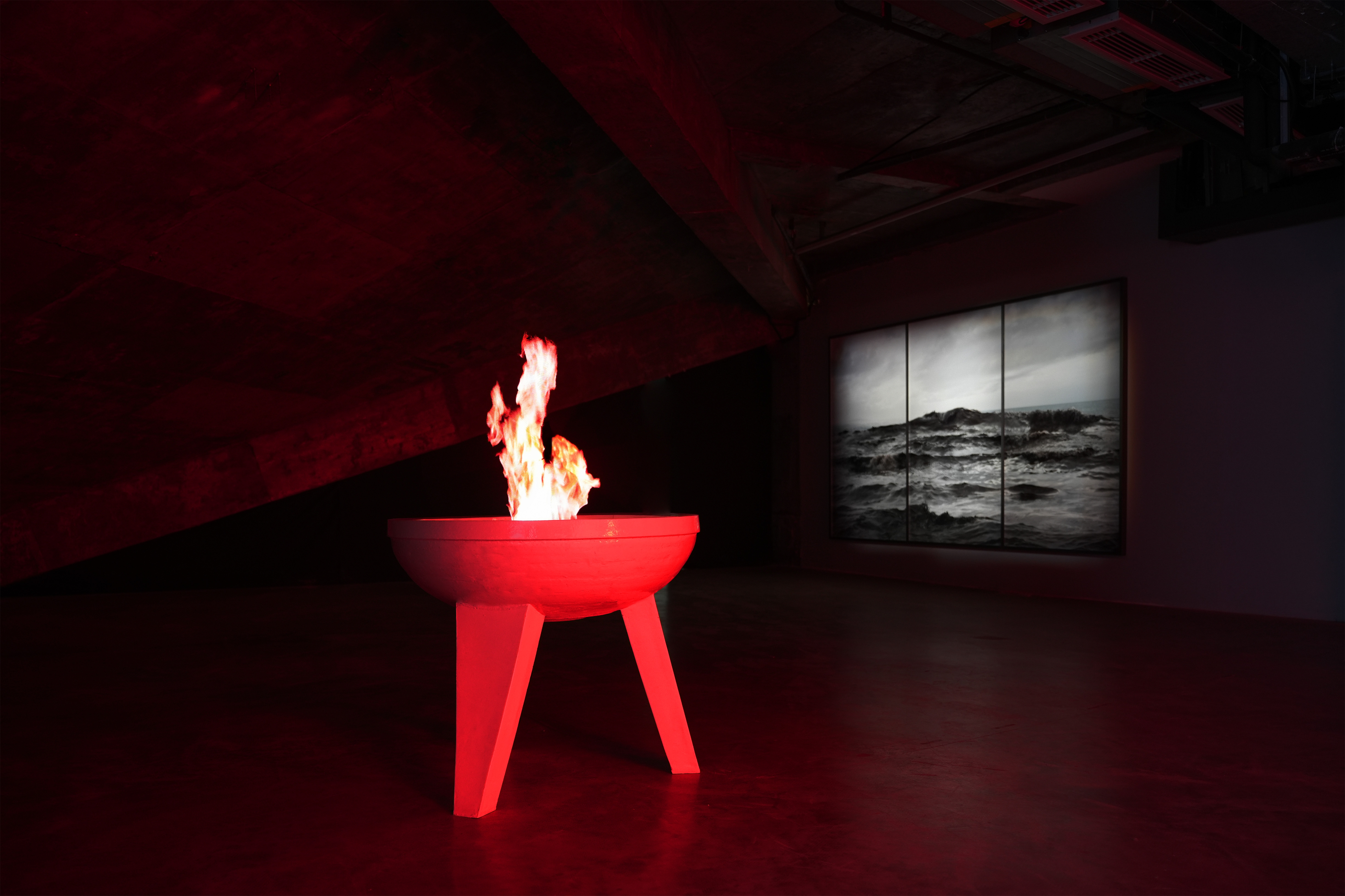
Installation view, "Tiān Gōng Kāi Wù: Rocks, Fire, Thunder", Beiqiu Museum for Contemporary Art, Nanjing, 2025.
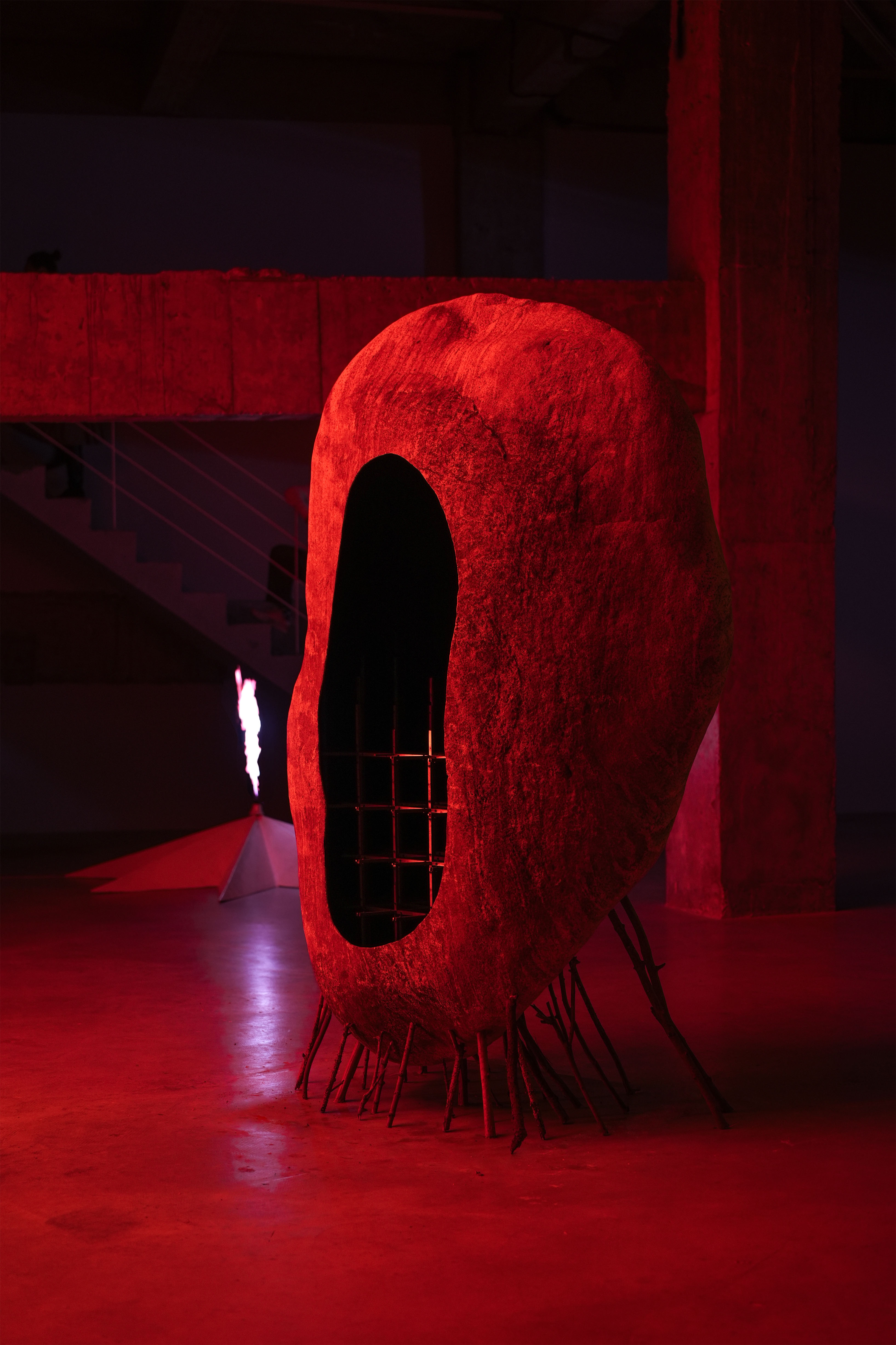
Installation view, "Tiān Gōng Kāi Wù: Rocks, Fire, Thunder", Beiqiu Museum for Contemporary Art, Nanjing, 2025.